
Culture. Reflection. Everyday life.
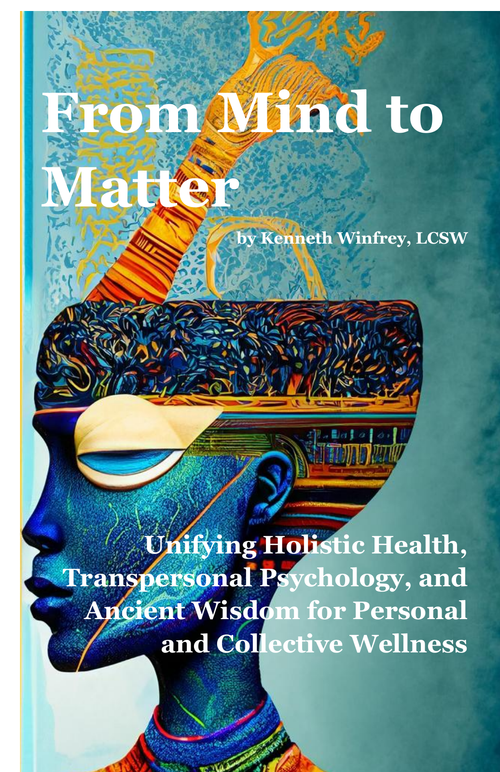
From Mind to Matter
The Umoja Reading Room pairs short excerpts from the book with articles about identity, relationships, and whole-person well-being. Explore the ideas, hear from other authors in the book’s conversation, and take a question into your own day.
Excerpts & reflections
November 2025 – September 2026 · Select “Read the article” to explore.
Two truths can belong in the same conversation
“Diunital logic represents a mode of cognition that differs significantly from the traditional Western way of thinking. The fundamental tenet of diunital logic lies in the embrace of "both/and" thinking, as opposed to the more commonly found "either/or" perspective. This means acknowledging and accepting the coexistence of seemingly contradictory elements or concepts.”
Read the articleClose the article
Article
A person can be grateful for a relationship and need something in it to change. They can recognize progress and feel exhausted. They can understand why a behavior developed and want to take responsibility for its effects now. Holding both parts can make a conversation more accurate.
Diunital logic, as explored in From Mind to Matter, offers language for this both/and perspective. It makes room for complexity without requiring a person to reduce their experience to a single acceptable emotion or a permanent category.
“The purpose is not to justify or rationalize but to understand.”
Gabor Maté’s discussion of compassionate curiosity helps clarify the relationship between understanding and responsibility. Looking closely at the circumstances of a behavior can make it easier to see what needs attention. An explanation does not have to become an excuse, and accountability does not have to become a verdict on the whole person.
Both/and thinking can begin with the words we choose. Someone might say that they care about a family member and need more distance. They might acknowledge that a coping strategy helped them through a difficult period and now carries costs they want to address. Each statement leaves room for history and present choice.
Making room for complexity still requires attention to facts, consent, and the consequences of actions. Different feelings can coexist without making every interpretation equally accurate. A useful conversation distinguishes what is known, what is felt, what is assumed, and what needs to be asked.
In counseling, this can open space to explore ambivalence rather than treating it as a failure to commit. A person can be uncertain and take a small next step. They can appreciate what has sustained them and consider another way forward. The aim is an understanding spacious enough to support an honest choice.
What becomes easier to say when you connect two parts of your experience with “and”?
Community is part of whole-person care
“In essence, the principle of "Communalism" in both BSA and Kemetic Yoga offers a perspective that recognizes our interconnectedness, promotes community support, and encourages collective responsibility for our shared challenges and resources.”
Read the articleClose the article
Article
A person arrives at counseling with more than a list of symptoms. They bring responsibilities, relationships, cultural knowledge, material needs, hopes, and a history of finding ways through difficult circumstances. Whole-person care begins by making room for that context.
From Mind to Matter describes communalism as attention to our shared challenges and resources. In everyday terms, that can include a trusted friend, an accessible community space, practical help, or the opportunity to contribute in a way that feels meaningful. The shape of support should be defined with the person, rather than assumed from a cultural label.
“wholeness is no trifling matter.”
Toni Cade Bambara’s line comes from the healer Minnie Ransom in The Salt Eaters. It gives weight to the idea of wholeness. Feeling better can involve relationships, daily conditions, and the responsibilities that become visible when someone has more room to act. The line also appears in Leila Kelly’s foreword to From Mind to Matter.
Community is not automatically comfortable or supportive. People may have experienced exclusion within families, institutions, or groups that were expected to offer belonging. A thoughtful conversation therefore asks where connection feels possible, where a boundary is needed, and what kind of support the person actually wants.
Practical circumstances belong in the picture as well. A plan can look sensible on paper and remain difficult to carry out when transport, work schedules, caregiving, or access to technology have not been considered. Recognizing those conditions can make the conversation more realistic and help identify where additional resources or collaboration may be useful.
At Umoja, attention to worldview and culture is an invitation to learn about the person’s own understanding of connection. Some people draw strength from family, faith, or community traditions. Others are building new forms of belonging. There is room to explore both the supports already present and the ones that still need to be found.
Who or what helps you feel supported, and what practical change would make that support easier to reach?
Experience can become a teacher
“This principle empowers individuals to trust their own insights and to value their personal journey as a rich source of knowledge.”
Read the articleClose the article
Article
Knowing the name of an idea and recognizing it in daily life are different kinds of learning. Someone may understand the concept of a boundary and still be discovering what it feels like to set one. A person may read about rest and still be learning what makes a pause possible in their own circumstances.
The book’s account of experiential knowledge gives lived experience a place in that learning. It invites attention to what happens before, during, and after a choice: what we notice, what we expected, and what deserves another look. Reflection helps turn an event into information we can use.
“The real meditation is how you live your life.”
Jon Kabat-Zinn’s reminder places practice within ordinary life. Attention does not have to be confined to a formal exercise. It can begin in a conversation, a transition between tasks, or the moment we recognize that we are moving through the day without noticing how we feel.
Personal experience is most useful when approached with curiosity and care. One good day does not establish why something helped. One difficult day does not predict every day that follows. Patterns become clearer when we consider the surrounding circumstances and remain willing to revise an explanation.
A small reflection can stay concrete: What happened? What did I notice in my body and emotions? What did I need? What would I keep or change next time? These questions allow experience to inform a conversation without requiring an immediate judgment about success or failure.
In counseling, a person’s account of daily life belongs alongside professional knowledge and careful assessment. Bringing an observation, a question, or an example can help make the work specific. The point is to discover what the experience means for the person living it, with enough openness for a new understanding to emerge.
What has a recent experience taught you that you understood differently when it was only an idea?
Harmony leaves room for difference
“Here, individuals are encouraged to complement each other's strengths and weaknesses, rather than seeking to dominate or submit to others. This fosters a sense of balance and mutual respect within relationships.”
Read the articleClose the article
Article
People do not have to become alike to work well together. A family, team, or community may include different strengths, limitations, histories, and ways of making sense of the world. Harmony asks what allows those differences to contribute to shared life with dignity.
In the book’s discussion of BSA, harmony concerns complementarity rather than a hierarchy in which one person must dominate and another must disappear. Agreement can be useful. A more revealing question is whether people have room to speak honestly, influence decisions, and have their needs taken seriously.
“investing in ourselves and our over-all well-being.”
This perspective also changes how we think about the body. Accessible yoga advocate Dianne Bondy describes movement as an investment in ourselves and our well-being. Her emphasis on access invites us to consider who a practice makes room for. A practice that respects a person’s body begins with the person who is actually present, including their preferences and current abilities.
From Mind to Matter connects reflection with embodied practice through its discussion of Kemetic Yoga. The everyday invitation is to pay attention to how we participate: when we rush, when we brace, when we stop listening, and when we need a pause. No particular spiritual identity or idealized body is required to ask those questions.
Harmony also makes room for honest disagreement. A peaceful appearance can conceal that one person has stopped speaking. A respectful disagreement can reveal needs that had remained hidden. The aim is a relationship with enough room for truth, adjustment, and mutual consideration.
In care, this means making goals together, discussing what feels workable, and revisiting the plan when circumstances change. Balance is something people negotiate and practice. It need not look identical from one person or one season of life to the next.
Where would more flexibility, access, or shared decision-making make participation easier for you or someone close to you?
Relationships need maintenance, too
“The structure of the ship equates to the foundational aspects of a relationship, such as trust, communication, and mutual respect. Without a strong structure, the ship would be vulnerable to the inevitable storms and challenges that arise in any human interaction, from misunderstandings to differing values.”
Read the articleClose the article
Article
A relationship has an everyday structure: what people can expect, how they communicate, what happens after a misunderstanding, and whether agreements are kept. That structure is built through ordinary moments. A grand gesture cannot tell a partner, friend, colleague, or family member what will happen the next time something becomes difficult.
The ship metaphor in From Mind to Matter makes those ordinary moments easier to notice. Trust and mutual respect form part of the vessel. Decisions about time, responsibilities, closeness, and boundaries help steer it. Both deserve attention before a crisis forces the conversation.
“Don’t Make Assumptions.”
Don Miguel Ruiz’s reminder to question assumptions offers a practical entry point. We may know that a message went unanswered. We may not yet know what the silence means. Naming the observation and asking a direct question leaves more room for an accurate answer than treating a feared explanation as an established fact.
Clarity also requires speaking from our own experience. A request such as asking for notice when plans change gives the other person something specific to respond to. A broad accusation about someone’s character can obscure the actual concern. Clear requests do not guarantee agreement; they make the point of disagreement easier to understand.
Maintenance includes limits as well as connection. People can care about each other and have different capacities, preferences, or obligations. An honest conversation may lead to a new agreement, a clearer boundary, or recognition that a relationship needs a different form. Counseling can offer a place to examine these patterns and identify what respectful participation would look like for the people involved.
What agreement would make one important relationship clearer, and what would you need to ask rather than assume?
Your worth is more than a score
“This final value stresses the importance of deriving self-worth from one's unique character rather than external recognition or wealth. It recognizes the inherent value of all individuals, regardless of their external achievements or capabilities.”
Read the articleClose the article
Article
An evaluation can describe a particular performance. A bank balance can describe a particular financial moment. Neither offers a complete account of a person. When every success becomes proof of worth and every setback becomes evidence against it, ordinary life can begin to feel like an endless examination.
The book’s discussion of intrinsic self-worth offers another starting point: dignity belongs to the person who is learning, struggling, contributing, resting, and beginning again. Income and achievement can matter a great deal to security, opportunity, and satisfaction. They do not have to carry the additional burden of proving that someone deserves care.
“identity and self-worth are intrinsic”
Psychologist Linda James Myers places this understanding within Optimal Psychology, an African-centered perspective that attends to worldview, identity, and our connections with others. Her words invite a useful question: what happens to our choices when worth is treated as a starting point rather than a prize?
Belief Systems Analysis (BSA), developed by Myers, explores how beliefs shape the meaning people make of their lives. Its accompanying 31-item Belief Systems Analysis Scale (BSAS) can prompt reflection on those beliefs. A questionnaire does not determine anyone’s value. The more useful conversation concerns the standards we have inherited, the ones we want to keep, and the ones we are ready to reconsider.
In everyday life, this may mean describing a mistake accurately without turning it into a verdict on the whole self. It may mean receiving praise with appreciation while remembering the qualities that remain when applause is absent. In counseling, it can mean having room to discuss shame, disappointment, ambition, and hope without having to earn the right to be heard.
Which qualities matter to you even when nobody is measuring, rewarding, or applauding them?
If you have questions or would like more support in finding a therapist right for you click this button below!